
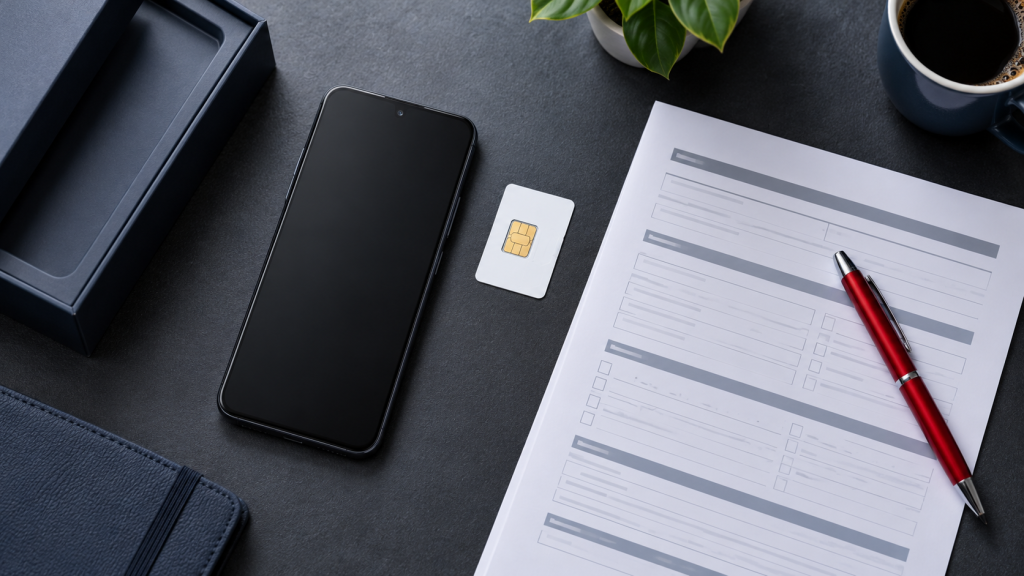
Nobody owns the mobile phones. They are half IT, half HR, and mostly whoever happened to order the last one. That is why lines keep billing for people who left in spring, why a lost handset turns into a scramble, and why the number on three hundred customer records occasionally walks out of the door. The fix is boring and it works: decide what happens at each stage, once, and write it down.
The short version
- Four moments matter: issuing, changing role, losing a device, and leaving.
- The number is a business asset. Treat it like one and most problems disappear.
- Suspend, do not cancel. Ceasing a number can make it unrecoverable.
- Write the policy before you need it, not during a resignation.
- One person owns the list. Without that, nothing else holds.
On this page
Issuing a phone
Most of the later problems are created here, in the twenty minutes nobody plans for.
- Decide whose name the line is in. The business. Always. A line in a personal name is a number you do not control.
- Record it. Person, number, SIM, handset, IMEI, tariff, and the date issued. A spreadsheet is fine. No record is not.
- Set the bundle to the role, not to whatever the last person had. A site-based role and a desk role need different things.
- Apply a spend cap. It costs nothing and removes the worst surprise.
- Enrol the device if you use management, which you should once you cannot physically reach every handset. Our guide to mobile device management covers when that point arrives.
- Tell them the rules, in writing, once. What the phone is for, what happens abroad, what happens if it is lost.
If you do not have a written policy, our company mobile phone policy checklist is a starting point you can adapt in an afternoon.
When roles change
The stage everyone forgets, and the reason bundles drift so far from reality.
When somebody moves from the road to a desk, or takes on travel, or picks up an on-call rota, their mobile needs change that week and usually nobody tells anyone. A year later you have a field tariff on a person who has not left the building since March.
Add one line to whatever your internal process is for role changes: does this change their phone? That single question catches most of it.
Lost, stolen or broken
Speed matters here, and the order matters more than people think.
- Lock or wipe first if you have management in place. The data is the risk, not the handset.
- Suspend the line, which stops usage without ceasing the number.
- Then deal with the hardware. Replacement, insurance, whatever applies.
- Reissue the same number to the replacement device so customers notice nothing.
Note the order. Cancelling the line first feels decisive and is the wrong move: it can cease the number and it does not protect the data sitting on the device. Our post on a lost phone and company data goes through this properly.
The leaver process
This is where the money leaks. On accounts of any size, lines still billing for departed staff are close to universal, because nothing in a normal leaving process touches the mobile account.
Three decisions, taken in advance:
| The number | What to do |
|---|---|
| Customers call it | Reassign to whoever takes over the role. The number stays with the job, not the person. |
| Internal only, no history | Suspend it and keep it for the next starter, or cease it deliberately. |
| It is in their personal name | Ask to transfer it while relations are good. After they have left you have very little leverage. |
Then the device: wipe the business data, confirm the handset is returned or written off, and update the record. Our post on keeping numbers when staff leave covers the porting detail.
Why the number matters most
Of everything above, this is the part worth repeating, because it is the one that occasionally does real damage.
A mobile number that customers use is a business asset, the same as a domain name or a vehicle. On a line held in the company's name it can be reassigned, parked or ported. On a line in an employee's own name it belongs to them, and when they go it goes, along with every customer who has it saved. You cannot port it out without their cooperation.
If you have lines in personal names right now, that is common and fixable. It is simply much easier to fix today than during somebody's notice period. Our guide to who owns the number when an employee leaves sets out how.
The one page version
- Issuing: business name, recorded, right bundle, spend cap, enrolled, rules given.
- Role change: does this change their phone?
- Lost or stolen: lock or wipe, suspend, replace, reissue the same number.
- Leaver: reassign or suspend the number, wipe the device, update the record.
- Quarterly: check every line against the staff list.
- Annually: check bundles against actual usage.
One named person owns that list. Without that, every other line of this falls over within a year.
Not sure what is on your account?
Send us a recent bill and we will tell you which lines belong to people who have left, which numbers are in the wrong name, and what the account should look like. We will do it whether or not you move to us.