
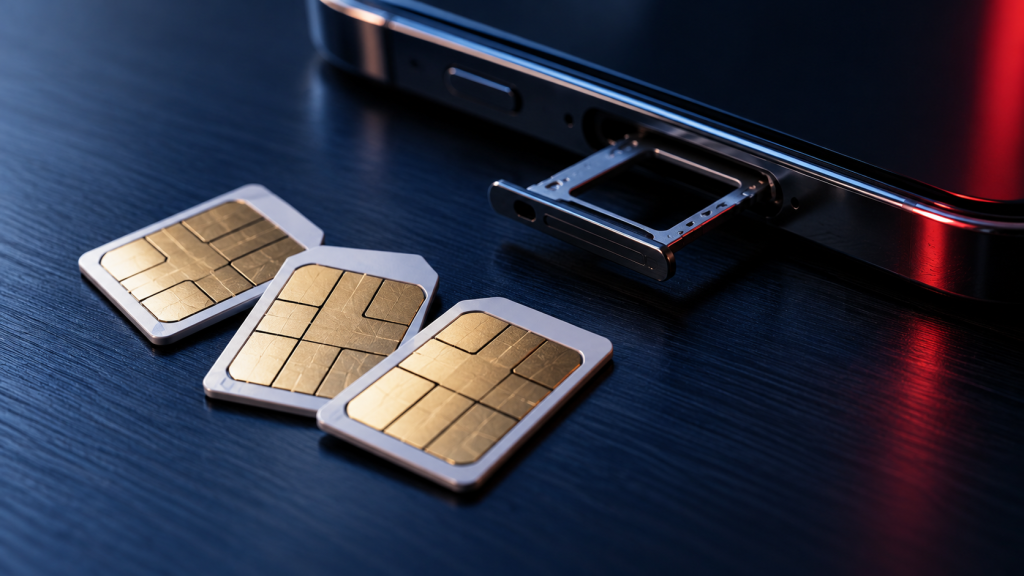
The honest starting point is that a personal SIM will make calls perfectly well. Nobody at the network will stop you running a company on consumer tariffs. The differences are not about signal or call quality, they are about who controls the numbers, what happens when somebody leaves, and whether one heavy month lands as a surprise. Here is what you actually get, and when a personal SIM is genuinely fine.
The 30-second version
- SIM only means service without a handset. You keep the phones you have and pay less each month.
- The business owns the numbers, which is the single biggest practical difference from personal SIMs.
- Data can be pooled across the account, which personal tariffs cannot do.
- One bill, one VAT invoice, instead of reimbursing people through expenses.
- Pay as you go is possible but rarely right for a business, for reasons below.
- If you are two people with phones you already own, a personal SIM may genuinely be fine. We will say so.
On this page
What SIM only actually means
A mobile contract usually bundles two things: the airtime, which is your calls, texts and data, and the handset, which you pay off monthly without it ever being described that way. SIM only is the first without the second.
You keep the phones you already own, put a new SIM in them and pay for the service alone. The monthly cost drops because you are no longer paying for hardware. The term is usually shorter too, because there is no handset cost to spread.
That is the whole concept. The useful questions are what a business SIM gives you that a consumer one does not, and when it is worth bothering.
What a business SIM gives you
| What you get | Why it matters |
|---|---|
| The business owns the numbers | The account is in the company name, so numbers can be reassigned, diverted or ported as a group. On a personal SIM the number belongs to the employee and leaves with them. |
| Pooled data | One shared allowance across every line. A heavy month for one person is covered by a quiet month for someone else, instead of one bill spiking. |
| One bill and a VAT invoice | No reimbursing people through expenses, no chasing receipts, and the VAT is reclaimable in the normal way rather than tangled up in personal spend. |
| Spend caps and alerts | Limits set per line, and a warning before somebody runs up a charge rather than after. |
| Add and remove lines | A new starter is live the same day. A leaver's line can be suspended or reassigned rather than cancelled and lost. |
| Support that knows the account | A named contact rather than a consumer queue, and the ability to change something without the handset's owner being present. |
None of that affects how well a call connects. All of it affects what happens on the day something changes.
Can we just use personal SIMs?
You can, and plenty of small businesses do. It is worth being straight about where it works and where it bites.
It works when the business is a couple of people, the phones are personal anyway, and the numbers are not the route customers use to reach the business. A sole trader whose mobile is also their personal phone is not doing anything wrong.
It bites at the first personnel change. If a salesperson's mobile is in their own name and on their own direct debit, that number is theirs. Every customer who has it saved goes with them, and there is nothing the business can do about it, because it was never the business's number. We have written about who owns a mobile number when an employee leaves because it comes up more than any other mobile question.
The second place it bites is the expenses trail. Reimbursing personal phone bills means somebody is reconciling mixed personal and business usage every month, and the VAT position is messier than a single business invoice.
Our comparison of business versus personal SIMs goes through it properly.
The test that settles it
If a member of staff left tomorrow, would the business keep the number customers ring them on? If yes, you are fine. If no, that is what a business account buys you, and it is usually worth more than the monthly difference.
Is pay as you go an option?
It exists and it is occasionally sensible, but it is rarely the right answer for a working team.
PAYG suits a spare handset, a device used a few times a year, or a short term need where a contract would be overkill. It does not suit regular use, because the per-unit cost is higher, the numbers still generally sit outside a business account structure, and you lose pooling, spend caps and the single invoice.
For connected devices rather than people, the better route is usually a data SIM on the business account, which gets you the same pooling and control. Our guide to choosing a data SIM covers that case.
When SIM only is the right call
- Your handsets have life in them. If phones are a year or two old and in reasonable condition, paying for them again inside a new contract makes no sense.
- You are coming out of a handset contract. This is the moment it matters most. Many bundled tariffs roll on at the same price after the phone is paid off, so moving to SIM only is often an immediate saving with no change for the user.
- You want shorter commitment. Without hardware to spread, terms are usually shorter and easier to adjust.
- You buy handsets separately. Some businesses prefer to own phones outright and keep the airtime flexible. SIM only is how that works.
The counter-case is honest too. If your team needs new phones and cash flow matters, a handset contract spreads a cost you would otherwise take upfront. That is a legitimate reason to choose it, and we would rather say so than pretend SIM only always wins. The full comparison is in SIM only or handset contract, and the maths behind it.
Moving your existing numbers across
Numbers move with you. The process is porting, and it takes a code from your current provider and a date.
What matters practically is that it is planned rather than improvised. Numbers port on a specified date, and a good provider will move a fleet in batches rather than all at once, so if anything needs attention it affects a few people rather than everybody. Nobody should lose service during it.
The one thing to check first is whose name each line is in. Numbers on personal accounts cannot be ported by the business, only by the individual, which is a conversation to have before you plan the move rather than during it.
Not sure whether SIM only saves you anything?
Send us your current bill. We will tell you whether your handsets are already paid for, what SIM only would cost on the same usage, and whether the numbers are actually yours to move. If staying put is the right answer we will tell you that too.